
AI agents are no longer just chatbots that answer questions. They are becoming digital workers. They can plan, take action, use tools, and even correct themselves. That sounds complex. But it does not have to be hard to understand. In this article, we will explore four powerful tool-using AI agent tools that help you build autonomous systems. We will keep it simple. And fun.
TLDR: AI agent tools let you build systems that can think, plan, and use software tools on their own. Platforms like Auto-GPT, LangChain, Microsoft AutoGen, and CrewAI make this possible without starting from scratch. These tools help agents search the web, write code, call APIs, and collaborate with other agents. If you want to build smart, semi-independent software workers, these are great places to start.
What Is a Tool-Using AI Agent?
Let’s break it down.
A normal AI model answers a question. That’s it.
An AI agent goes further. It can:
- Set goals
- Make plans
- Use tools like search engines or calculators
- Observe results
- Adjust its plan
Think of it like giving your AI a toolbox. Instead of just talking, it can act.

For example, suppose you say: “Research the best laptops under $1,000 and summarize the results in a table.”
A tool-using agent might:
- Search the web
- Open product pages
- Extract prices and specs
- Compare options
- Generate a neat summary
All with minimal help from you.
Now let’s look at four tools that help you build systems like this.
1. Auto-GPT – The Autonomous Experimenter
Auto-GPT is one of the earliest and most famous autonomous agent tools. It captured attention because it showed what happens when you let GPT models loop on their own.
Instead of you prompting again and again, Auto-GPT does this:
- Generates a thought
- Chooses an action
- Uses a tool
- Looks at the result
- Repeats the process
Over and over. Until the goal is complete.
What Makes It Special?
- Goal-driven loops
- File reading and writing
- Internet browsing
- Memory storage
This means you can say: “Create a business plan for a coffee shop.” And Auto-GPT will break that into sub-tasks:
- Research competitors
- Identify costs
- Draft sections
- Edit content
It works like a junior analyst who does not get tired.
Best For:
- Experimenting with autonomous workflows
- Research-heavy tasks
- Multi-step problem solving
It may require some technical setup. But it gives you a clear look at what independent AI behavior looks like.
2. LangChain – The Agent Builder Toolkit
If Auto-GPT is an experimenter, LangChain is a construction kit.
It is a framework. That means it gives you building blocks. You decide how to connect them.
LangChain helps developers:
- Connect language models to tools
- Add memory to conversations
- Call APIs
- Use databases
- Create reasoning chains
Why Is This Powerful?
Because real-world systems are messy.
You may want your agent to:
- Read a PDF
- Pull live stock prices
- Store information in a database
- Send an email
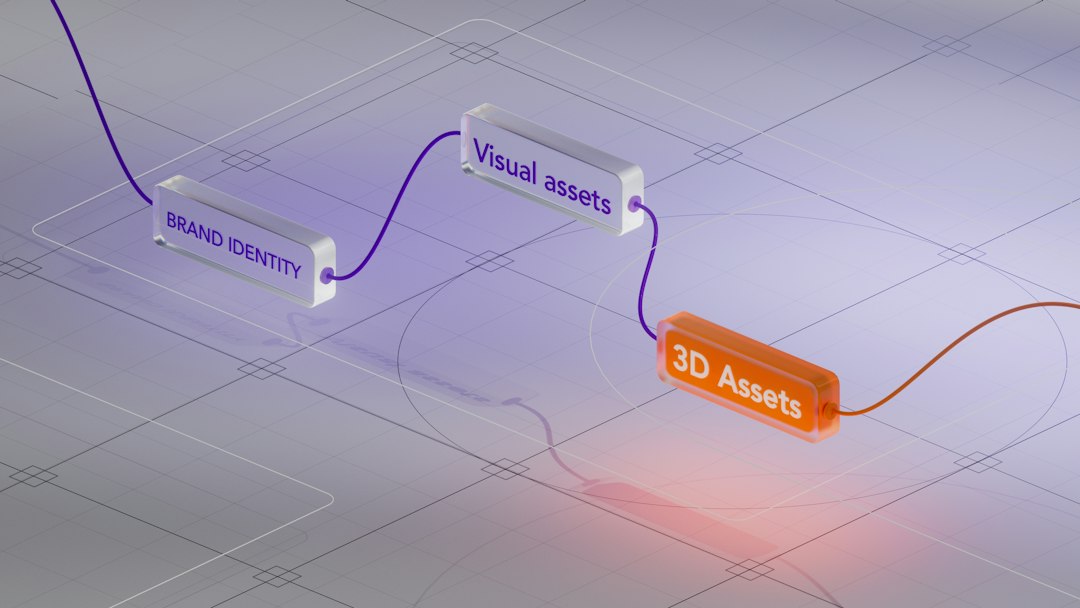
LangChain lets you “chain” these steps together.
For example:
- User asks a question about company revenue.
- Agent checks a financial database.
- If data is outdated, it searches the web.
- It summarizes results.
- It stores new insights.
That is an autonomous system in action.
Best For:
- Developers building production-grade systems
- Custom AI workflows
- Apps that need multiple integrations
LangChain gives you flexibility. It does not lock you into one pattern. You build your own.
3. Microsoft AutoGen – Multi-Agent Conversations
Now things get really interesting.
Microsoft AutoGen focuses on something powerful: multiple AI agents talking to each other.
Yes. Agents can collaborate.
Instead of one AI doing everything, you can design a team:
- A Planner agent
- A Coder agent
- A Reviewer agent
- A User proxy agent
They send messages back and forth. Just like coworkers.

How It Works
Imagine you want to build a small web app.
You give a high-level request:
“Build a simple to-do list app.”
The system might:
- Planner creates task breakdown.
- Coder writes the code.
- Reviewer checks for bugs.
- Coder fixes issues.
- System delivers final result.
All inside a structured multi-agent conversation.
Why This Matters
Autonomous systems become more powerful when responsibilities are separated.
It mirrors how humans work in teams.
This approach reduces:
- Hallucinations
- Logical errors
- Half-finished outputs
Because one agent checks another.
Best For:
- Complex coding tasks
- Collaborative AI systems
- Simulations and experimentation
If you like the idea of AI teamwork, AutoGen is exciting.
4. CrewAI – Simple Multi-Agent Orchestration
CrewAI takes the multi-agent idea and makes it easier to manage.
It focuses on structured “crews” of agents. Each agent has:
- A defined role
- A specific goal
- Clear tools
You basically assign jobs. Like a manager.
What Makes CrewAI Friendly?
It encourages you to think in simple terms:
- Who is in the crew?
- What is each agent responsible for?
- In what order do they work?
For example, building a content marketing system:
- Researcher Agent – Finds trending topics
- Writer Agent – Drafts article
- Editor Agent – Improves clarity
- SEO Agent – Optimizes keywords
The crew completes tasks step by step.
The design is clean. Easy to reason about. Easy to expand.
Best For:
- Businesses automating workflows
- Content production systems
- Startups testing AI teams
CrewAI feels practical. Less experimental. More structured.
How These Tools Actually Help You Build Autonomous Systems
Let’s zoom out.
All four tools support key ingredients of autonomy:
1. Planning
Agents break large goals into small tasks.
2. Tool Use
Agents can search, calculate, code, and call APIs.
3. Memory
Agents remember past actions and results.
4. Reflection
Agents review and improve their own output.
When you combine these, you move from chatbot to digital worker.
Choosing the Right Tool
Feeling overwhelmed? Keep it simple.
- If you want to experiment fast → Try Auto-GPT.
- If you want fine control and flexibility → Use LangChain.
- If you want AI teams that collaborate → Explore AutoGen.
- If you want structured AI crews for business → Use CrewAI.
There is no single winner.
It depends on what you are building.
The Big Picture
We are moving toward software that does not just respond.
It acts.
Autonomous AI systems can:
- Run research pipelines
- Monitor markets
- Generate reports
- Build code
- Manage content workflows
And they can do this with minimal supervision.
That does not mean humans disappear.
It means humans supervise smarter systems.
You define the goal. The agent handles the steps.
Final Thoughts
Tool-using AI agents are changing how software works. They bring decision-making, iteration, and collaboration into automated systems.
The tools we covered:
- Auto-GPT
- LangChain
- Microsoft AutoGen
- CrewAI
Each represents a different way to approach autonomy.
Some are experimental. Some are production-ready. All are powerful.
If you are building the future of automation, start playing with these frameworks. Start small. Give an agent one goal. Let it use one tool. Then expand.
Autonomous systems are not magic.
They are structured loops. Clear roles. Smart tool use.
And now, you know where to begin.