
Vector search has become a foundational capability for modern AI systems, enabling applications to search not just by keywords but by meaning. At the core of this transformation are embedding models—tools that convert text, images, audio, or other data into high-dimensional numerical vectors that machines can compare efficiently. Choosing the right embedding model tool can significantly affect the accuracy, scalability, and effectiveness of your semantic search implementation.
TLDR: Embedding model tools convert content into numerical vectors that power semantic and vector search. The right tool improves relevance, scalability, and multilingual performance while integrating seamlessly with vector databases. This article explores five leading embedding model tools and explains how each supports production-grade vector search systems. Selecting based on performance metrics, customization options, and infrastructure compatibility is critical for long-term success.
Below are five embedding model tools that help organizations enable reliable and high-performance vector search.
1. OpenAI Embedding Models
OpenAI’s embedding models are among the most widely adopted tools for production-grade vector search. They are designed to provide high semantic accuracy across multiple tasks, including document retrieval, question answering, clustering, and recommendation systems.
One of the primary strengths of OpenAI embeddings is their ability to capture contextual meaning across long passages of text. This ensures that even subtle semantic relationships are preserved in vector form. For organizations building AI-driven knowledge bases or customer support search engines, this depth of contextualization significantly increases retrieval relevance.
- High semantic fidelity across diverse text domains
- Multilingual capability for global applications
- API accessibility for seamless integration
- Scalable infrastructure for enterprise workloads
These embeddings integrate seamlessly with vector databases such as Pinecone, Weaviate, Milvus, and others. By combining OpenAI embeddings with a distributed vector index, companies can search across millions—or even billions—of vectors in milliseconds.

Organizations frequently choose OpenAI embeddings for use cases such as:
- Enterprise document search
- Chatbot memory and retrieval augmentation
- Product recommendations
- Content moderation similarity checks
For teams prioritizing performance, reliability, and ease of deployment, OpenAI embeddings provide a mature and well-supported solution.
2. Cohere Embed
Cohere offers powerful embedding models engineered specifically for semantic search and retrieval tasks. Their Embed models are optimized for high-quality text representations and ranking-based workflows.
Cohere differentiates itself through a strong focus on search relevance and reranking capabilities. In addition to generating embeddings, it offers reranking endpoints that refine search results by comparing contextual relationships at query time. This layered approach helps organizations improve precision without requiring complex custom models.
Key features include:
- Task-specific embedding models
- Efficient inference suitable for real-time systems
- Multilingual support
- Complementary reranking models
For teams building AI applications where ranking quality is critical—such as legal research tools, academic databases, or internal knowledge management systems—Cohere Embed is particularly effective.
Its clarity of documentation and transparent benchmarking make it appealing for enterprises that require predictable performance outcomes and explainability.
3. Hugging Face Sentence Transformers
Hugging Face’s Sentence Transformers library is a flexible, open-source solution for generating embeddings. Built on transformer architectures such as BERT and RoBERTa, it allows developers to fine-tune models for domain-specific semantic similarity tasks.
The openness of this ecosystem makes it attractive for teams that require customization. Rather than relying exclusively on API-based solutions, developers can deploy models locally or within private cloud environments. This is especially important in industries with strict data governance requirements.
Image not found in postmeta
Notable advantages:
- Open-source flexibility
- Fine-tuning capabilities
- Broad model selection
- On-premise deployment support
Sentence Transformers integrate effectively with vector databases like FAISS and Elasticsearch. Organizations working with proprietary technical documentation or highly specialized legal, medical, or financial data often select this approach because it enables fine-tuning embeddings on internal datasets.
However, this flexibility comes with trade-offs. It typically requires greater machine learning expertise and infrastructure management compared to fully managed API offerings. For technically mature teams, though, the ability to adapt and optimize embeddings can deliver superior retrieval accuracy.
4. Google Vertex AI Text Embeddings
Google’s Vertex AI platform includes powerful embedding models optimized for large-scale production environments. These models leverage Google’s deep expertise in search and information retrieval—foundational capabilities that underpin products like Google Search itself.
Vertex AI embeddings are particularly appealing for organizations already operating within the Google Cloud ecosystem. Native integration with BigQuery, data pipelines, and managed Kubernetes environments simplifies deployment at scale.
Core strengths include:
- Enterprise-grade scalability
- Strong multilingual performance
- Integration with Google Cloud services
- Managed infrastructure
For example, a global retailer building semantic product search can integrate text embeddings with structured data pipelines and serve personalized recommendations in near real time. Vertex AI’s ecosystem accelerates development by reducing infrastructure overhead.
Additionally, Google’s research-backed modeling ensures embeddings perform well across diverse content types and international datasets. Organizations seeking reliable multilingual vector search often consider Vertex AI a leading candidate.
5. Amazon Titan Embeddings (AWS Bedrock)
Amazon’s Titan Embeddings, available through AWS Bedrock, are purpose-built for semantic search, clustering, and recommendation engines within the AWS ecosystem. These embeddings are designed for efficient indexing and low-latency retrieval across massive datasets.
A key advantage of Titan is seamless integration with AWS-native tools such as OpenSearch, Aurora, and S3. This makes it particularly attractive for enterprises already invested heavily in AWS infrastructure.
Image not found in postmeta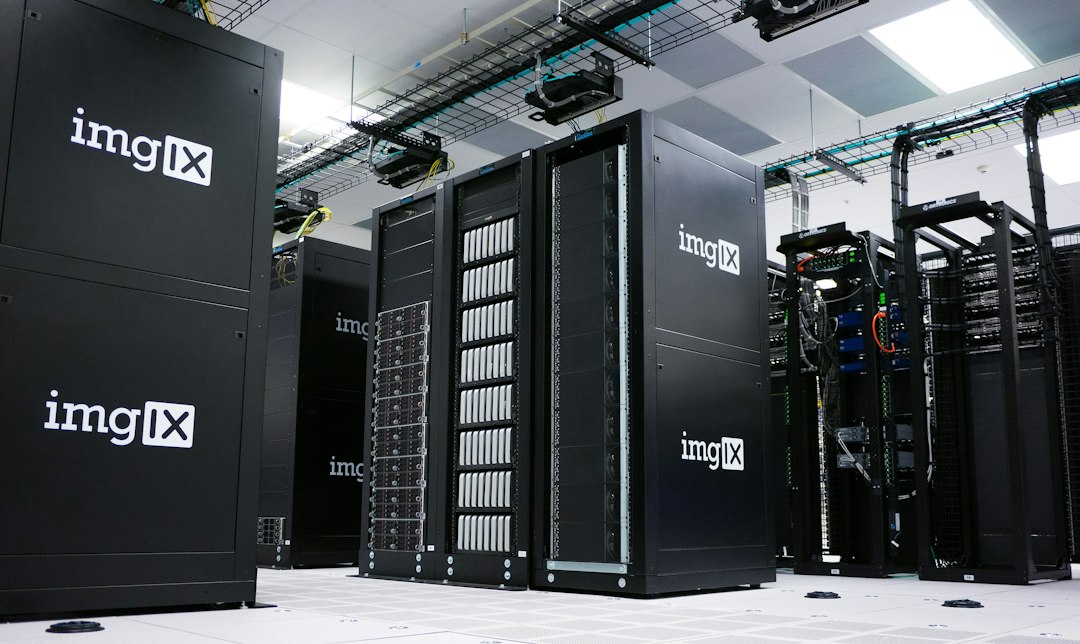
Main benefits include:
- Optimized for AWS-native workflows
- Secure enterprise deployment
- Scalable vector indexing
- Integration with Bedrock foundation models
Organizations handling high-volume transactional data or building AI-driven analytics platforms often prefer AWS Titan due to its enterprise security controls and regional compliance capabilities.
When embedding generation and vector storage must coexist within a strictly governed cloud environment, Titan offers a cohesive, infrastructure-aligned option.
What to Consider When Choosing an Embedding Model Tool
While the five tools above represent leading options, selecting the right solution requires careful evaluation. Organizations should assess:
- Embedding dimensionality: Higher dimensions can improve nuance but increase storage and computation costs.
- Latency and throughput: Real-time systems demand low response times.
- Domain adaptability: Some applications require fine-tuning for industry-specific terminology.
- Multilingual support: Global platforms require semantic consistency across languages.
- Infrastructure compatibility: Integration with your cloud or on-premise stack is critical.
Vector search performance ultimately depends on the synergy between the embedding model and the vector database. Even the most advanced embedding model can underperform if indexing parameters, similarity metrics, or scaling strategies are poorly configured.
The Strategic Value of Embeddings in Modern Systems
Embedding models are more than technical utilities—they represent a foundational shift in how machines understand content. By encoding semantic information into numeric form, they enable:
- Context-aware search
- Recommendation systems based on meaning
- Fraud and anomaly detection via similarity patterns
- AI copilots that retrieve relevant knowledge dynamically
As organizations increasingly adopt retrieval-augmented generation (RAG) architectures, the importance of high-quality embeddings continues to grow. Reliable vector search ensures that generative AI systems access accurate, contextually relevant data rather than relying solely on pre-trained knowledge.
In enterprise environments, this directly impacts decision quality, operational efficiency, and customer satisfaction.
Conclusion
Enabling vector search begins with selecting the right embedding model tool. Whether you prioritize managed simplicity, open-source flexibility, deep cloud integration, or domain customization, solutions such as OpenAI Embeddings, Cohere Embed, Hugging Face Sentence Transformers, Google Vertex AI, and Amazon Titan provide credible paths forward.
Each platform offers distinct advantages in scalability, semantic accuracy, and infrastructure alignment. The correct choice depends not only on benchmark performance but also on governance requirements, deployment strategy, and long-term AI roadmap alignment.
As semantic search becomes central to intelligent systems, embedding models will remain essential building blocks. Organizations that invest in robust embedding infrastructure today position themselves to deliver more precise, context-aware, and scalable AI-driven search experiences tomorrow.