
Artificial intelligence is no longer a single tool performing a single task. In modern organizations, AI systems analyze data, answer customer queries, generate reports, detect fraud, schedule logistics, monitor infrastructure, and even collaborate with other AI models. As the number of AI-powered tools grows, so does the complexity of managing them. This is where multi-agent coordination software enters the picture—acting as an intelligent conductor that ensures every AI “musician” plays in sync.
TLDR: Multi-agent coordination software helps organizations manage, orchestrate, and monitor multiple AI systems working together. Instead of operating in silos, AI agents collaborate through structured workflows, shared memory, and centralized oversight. This leads to greater efficiency, reduced conflicts, and scalable automation. As AI ecosystems grow, coordination platforms are becoming essential rather than optional.
At its core, multi-agent coordination software is designed to manage multiple AI agents that each perform specific tasks but must work together to achieve broader goals. Think of it as workflow automation combined with intelligent communication and governance. Rather than manually stitching together integrations or relying on brittle scripts, organizations can deploy coordinated systems that dynamically adapt, negotiate responsibilities, and share information.
Why Multi-Agent Systems Need Coordination
In the early days of AI adoption, companies typically used one model per use case. Today, that approach no longer scales. A single business process often involves multiple AI systems such as:
- Natural language processing models for communication
- Predictive analytics engines for forecasting
- Computer vision systems for image recognition
- Recommendation engines for personalization
- Robotic process automation bots for task execution
When these systems operate independently, challenges quickly arise:
- Data silos: Agents don’t share context or updates.
- Task conflicts: Multiple agents may act on the same workflow step.
- Inconsistent decision-making: Different models produce outputs that don’t align.
- Lack of oversight: It becomes difficult to track who did what and why.
Multi-agent coordination software solves these issues by creating a centralized layer that standardizes communication, task delegation, and monitoring.
How Multi-Agent Coordination Software Works
Although implementations vary, most coordination platforms share three key architectural components:
1. Agent Registry and Role Assignment
Each AI system is registered as an “agent” with predefined capabilities and constraints. For example:
- An agent responsible for market analysis
- An agent responsible for summarizing insights
- An agent responsible for generating client-ready presentations
The coordination software defines which tasks each agent can handle and how they interact. Clear role definitions reduce redundancy and prevent operational conflict.
2. Shared Memory and Context Management
For effective collaboration, agents must share context. Advanced systems implement:
- Distributed memory layers that store conversation and task history
- State management systems that track workflow progression
- Knowledge bases accessible by multiple agents simultaneously
This ensures that one agent’s output seamlessly becomes another’s input.
3. Orchestration and Decision Logic
The coordination layer manages task sequencing, parallelization, fallback logic, and approval workflows. It determines:
- Which agent acts first
- Whether tasks run sequentially or concurrently
- How errors are handled
- When human oversight is required
Many platforms also incorporate negotiation protocols where agents can propose actions, evaluate alternatives, and jointly agree on outcomes—especially useful in logistics, resource allocation, and automated trading systems.
Real-World Use Cases
Customer Support Automation
Imagine a customer submits a complex inquiry. Instead of routing it to a single chatbot, a coordinated system might:
- Use a classification agent to determine the issue type.
- Deploy a knowledge retrieval agent to gather relevant documentation.
- Activate a sentiment analysis agent to assess tone.
- Allow a response composition agent to craft the reply.
- Pass the draft to a compliance review agent.
The result is a seamless, multi-step process handled collaboratively without human intervention—unless escalation is necessary.
Healthcare Diagnostics
In clinical environments, one AI model may analyze imaging data, another may assess lab results, and a third may review patient histories. Coordination software ensures that these analyses are synthesized into a unified evaluation, flagging discrepancies before presenting insights to medical professionals.
Supply Chain Management
Supply chains involve forecasting demand, adjusting production schedules, optimizing routes, and tracking inventory. Multiple AI agents can perform these tasks simultaneously, while the coordination layer balances trade-offs such as cost, time, and sustainability.
Key Features to Look For
If you’re considering deploying multi-agent coordination software, prioritize the following capabilities:
- Scalability: Can it handle dozens or hundreds of agents?
- Transparency: Are logs and decision paths visible for auditing?
- Security controls: Does it enforce permissions and data isolation?
- Interoperability: Does it integrate with APIs, cloud services, and external data sources?
- Human-in-the-loop controls: Can humans intervene easily?
Advanced systems may also incorporate simulation environments where workflows are tested before deployment—reducing risk during implementation.

The Role of Governance and Oversight
As AI systems gain autonomy, governance becomes critical. Multi-agent coordination platforms often integrate:
- Policy engines that enforce organizational rules
- Compliance auditing tools to track decisions
- Bias detection layers that monitor outputs
- Risk scoring systems to evaluate potential negative impact
This governance layer provides accountability. Without it, interconnected AI agents could amplify errors, propagate misinformation, or make inconsistent decisions across departments.
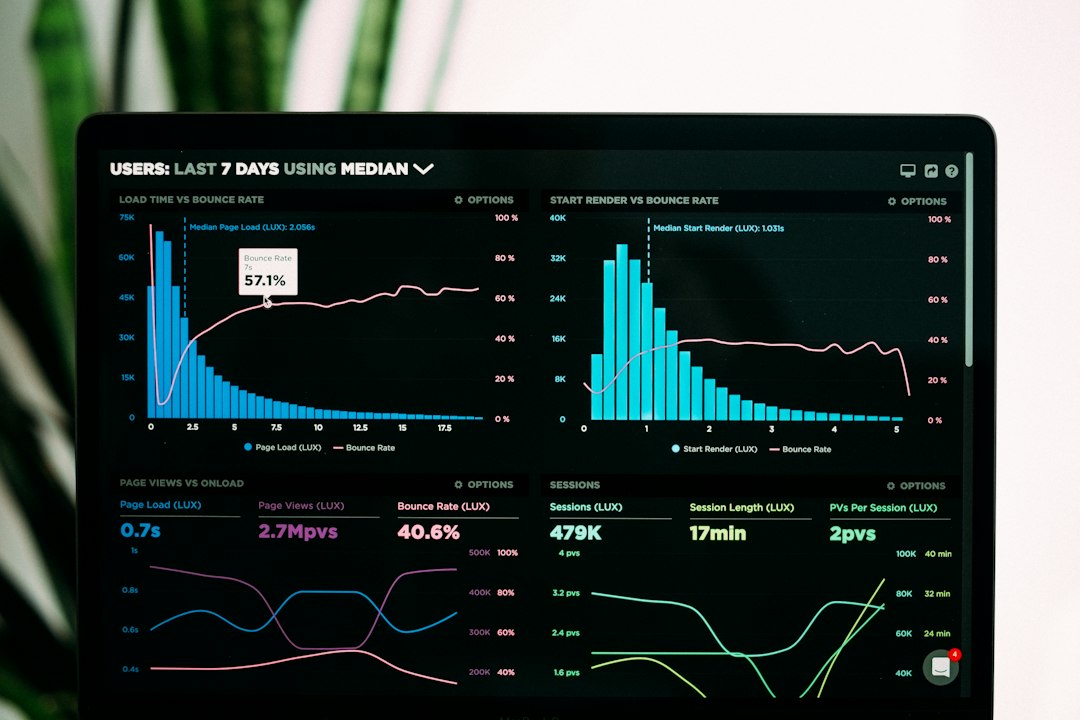
Transparency dashboards allow managers to inspect workflows in real time. These interfaces display which agents were activated, how long they worked, what data they accessed, and why certain decisions were made.
Benefits of Coordinated AI Systems
Organizations adopting multi-agent coordination software often report significant improvements:
- Operational efficiency: Parallel task execution reduces completion times.
- Accuracy improvements: Agents cross-check each other’s outputs.
- Reduced duplication: Clearly defined roles prevent redundant processing.
- Scalable automation: New agents can plug into existing ecosystems.
- Adaptive problem-solving: Systems can re-route tasks if one agent fails.
Instead of brittle pipelines that break when a step fails, coordinated systems dynamically reconfigure workflows, making them more resilient.
Design Considerations and Challenges
Despite their advantages, building or deploying such software is not trivial.
One primary challenge is communication overhead. When too many agents exchange messages simultaneously, performance can degrade. Efficient message routing and prioritization are essential.
Another issue is conflict resolution. If two agents recommend opposing actions, the system must evaluate criteria such as confidence scores, historical reliability, or pre-assigned authority levels.
There’s also the matter of emergent behavior. Complex systems can produce unintended outcomes when agents interact in unpredictable ways. Continuous monitoring and sandbox testing help mitigate this risk.
The Future of Multi-Agent Coordination
Looking ahead, multi-agent coordination software is expected to evolve in several key directions:
- Autonomous goal decomposition: Systems will break down high-level objectives into subtasks automatically.
- Self-healing workflows: AI ecosystems will detect inefficiencies and optimize themselves.
- Cross-organization collaboration: Agents from different companies may interact within shared ecosystems.
- Standardized communication protocols: Industry-wide frameworks could enable plug-and-play AI interoperability.
As AI continues to shift from isolated tools to collaborative digital coworkers, orchestration software will play the same role for machines that management frameworks play for human teams.
Conclusion
Managing a single AI system can be challenging. Managing dozens or hundreds requires structure, visibility, and intelligent coordination. Multi-agent coordination software provides that foundation, enabling AI systems to collaborate, share knowledge, and operate with defined governance.
Organizations that embrace these coordination platforms gain more than efficiency—they gain clarity and control over increasingly complex AI ecosystems. As industries automate more processes and delegate more decision-making to machines, the ability to orchestrate AI agents effectively will become a defining capability of modern enterprises.
In the emerging landscape of intelligent systems, success won’t depend solely on how powerful individual models are. It will depend on how well they work together.