
Large language models (LLMs) have rapidly evolved from experimental research systems into mission-critical tools used in customer support, legal analysis, healthcare documentation, research, and enterprise automation. While off-the-shelf models are powerful, they are often too general to meet specialized business requirements. Fine-tuning allows organizations to adapt these models to domain-specific language, workflows, and compliance constraints. Choosing the right fine-tuning tool is therefore not just a technical decision—it is a strategic one.
TLDR: Fine-tuning large language models enables organizations to tailor AI systems to their specific domain, tone, and tasks. Three standout tools for this process are Hugging Face Transformers for flexibility and research control, OpenAI Fine-Tuning API for streamlined commercial deployment, and Weights & Biases for experiment tracking and optimization management. Each serves a distinct role depending on your infrastructure, compliance needs, and technical depth. Selecting the right tool can significantly improve model performance, governance, and long-term scalability.
Why Fine-Tuning Matters More Than Ever
Pretrained LLMs are trained on vast corpora of publicly available text, allowing them to perform well across a broad range of tasks. However, they may struggle with:
- Industry-specific terminology
- Proprietary knowledge
- Consistent brand tone
- Regulatory compliance constraints
- Structured output formatting
Fine-tuning narrows this gap by retraining the model on carefully curated datasets. The result is a system that produces more accurate, reliable, and context-aware outputs aligned with your operational goals.
Below are three platforms that have emerged as reliable solutions for organizations serious about customizing LLMs.
1. Hugging Face Transformers – Maximum Flexibility and Control
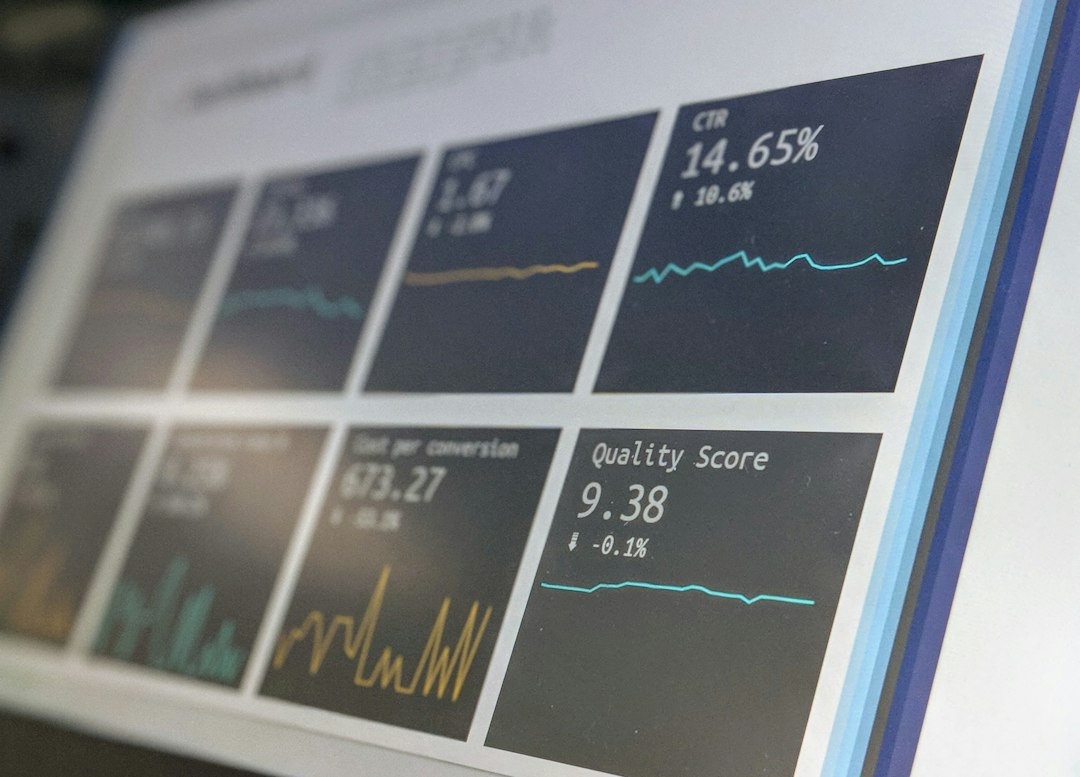
Hugging Face has become one of the most respected ecosystems in modern NLP development. Its Transformers library offers extensive support for model fine-tuning across numerous architectures, including encoder-decoder, decoder-only, and instruction-tuned models.
What Makes It Powerful
Hugging Face provides researchers and engineers with full control over the training process. This includes:
- Choice of base model architecture
- Custom training loops
- Advanced optimization strategies
- Parameter-efficient fine-tuning methods (LoRA, adapters, PEFT)
- Distributed training capabilities
Such flexibility makes it ideal for organizations with in-house ML engineering teams who require granular oversight of hyperparameters, tokenization strategies, and evaluation metrics.
When to Use Hugging Face
This solution is best suited for:
- Research institutions experimenting with new architectures
- Enterprises with strict data governance policies requiring on-premise deployment
- Teams building proprietary models from open-source checkpoints
- Advanced experimentation involving reinforcement learning or instruction tuning
Its primary advantage is freedom. However, that flexibility demands technical expertise. Infrastructure management, GPU provisioning, and optimization tuning fall squarely on the user’s shoulders.
In short: Hugging Face is for teams that want control over every layer of the stack.
2. OpenAI Fine-Tuning API – Streamlined and Production-Ready
Not every organization wants to manage GPUs or adjust learning rates. For many, the priority is speed, stability, and seamless integration with production systems. The OpenAI Fine-Tuning API addresses this need directly.
Core Strengths
The OpenAI Fine-Tuning approach simplifies the customization process by allowing users to:
- Upload structured training datasets
- Fine-tune supported base models
- Evaluate performance automatically
- Deploy improved versions via API endpoints
This drastically lowers the operational burden compared to self-managed training environments. Infrastructure scaling, training optimization, and hardware management are abstracted away.
Why It Appeals to Enterprises
Organizations benefit from:
- Managed infrastructure
- High model reliability
- Integrated safety improvements
- Rapid iteration cycles
For customer support bots, document summarization workflows, or structured output tasks, API-based fine-tuning often delivers measurable gains in consistency and tone alignment.
However, it does have boundaries. Compared to fully open training frameworks, users may have less visibility into low-level tuning parameters or architectural changes.
In summary: OpenAI’s solution balances customization with operational simplicity, making it ideal for production-driven teams.
3. Weights & Biases – Experiment Tracking and Optimization at Scale
While not a training framework itself, Weights & Biases (W&B) is a critical tool in serious fine-tuning workflows. Fine-tuning is inherently experimental: multiple datasets, hyperparameter combinations, and model variants must be tested before arriving at optimal performance. Without rigorous tracking, this process becomes chaotic and difficult to reproduce.
The Role It Plays
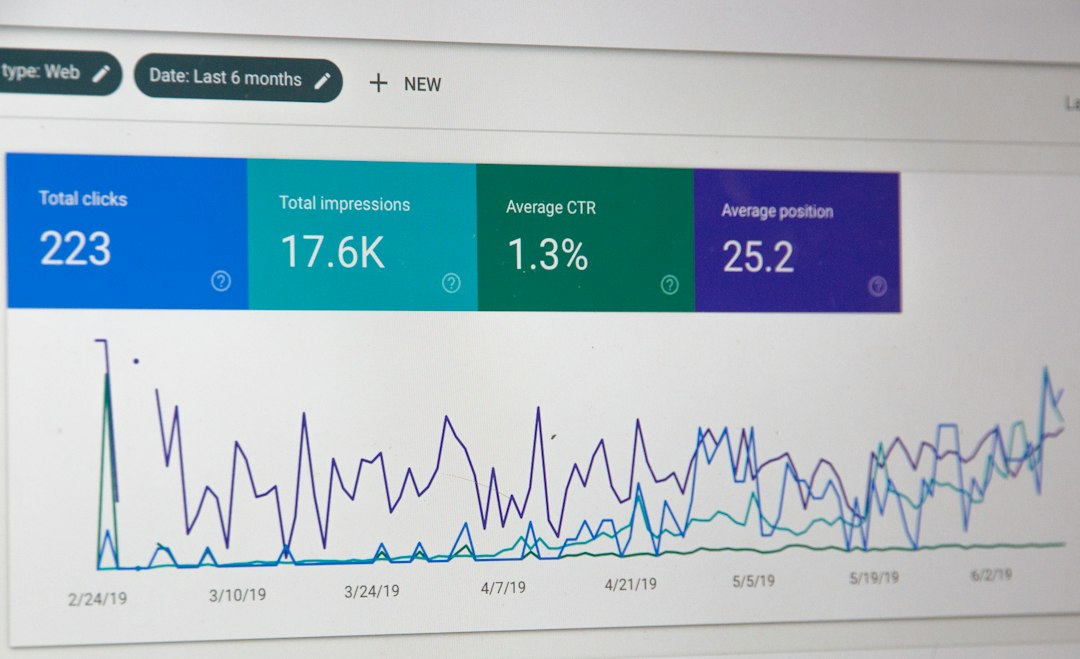
Weights & Biases acts as a central command center for:
- Tracking training runs
- Monitoring GPU utilization
- Visualizing loss curves
- Comparing experiment results
- Logging dataset versions
When paired with Hugging Face or other fine-tuning pipelines, it dramatically increases transparency and reproducibility.
Why It Matters for Governance
As regulatory frameworks around AI strengthen, documentation becomes essential. W&B enables teams to maintain:
- Clear experiment lineage
- Performance audit trails
- Version control for models
- Collaboration across teams
This is particularly valuable in healthcare, finance, and legal industries, where performance claims must be backed by traceable evidence.
Bottom line: Fine-tuning without proper tracking tools increases risk. Weights & Biases reduces that risk significantly.
How to Choose the Right Tool
Selecting among these solutions depends on several key factors:
1. Technical Expertise
- If you have experienced ML engineers → Hugging Face offers maximum flexibility.
- If your team prefers managed services → OpenAI API provides simplicity.
2. Infrastructure Requirements
- Need full on-premise control → Hugging Face
- Prefer cloud-native deployment → OpenAI
3. Experiment Complexity
- Running multiple training iterations → Add Weights & Biases to your stack.
4. Compliance and Governance
- Require auditable training records → Weights & Biases integration is strongly recommended.
Many mature organizations combine tools. For example:
- Hugging Face for training
- Weights & Biases for tracking
- API deployment layer for inference
This modular approach ensures both flexibility and operational structure.
Best Practices for Effective Fine-Tuning
Tool selection is only part of the process. Successful fine-tuning also depends on disciplined methodology:
- Start with carefully curated data rather than large, noisy datasets.
- Use parameter-efficient techniques to reduce compute costs.
- Evaluate on domain-specific benchmarks, not generic metrics alone.
- Maintain separation between training and validation data.
- Continuously monitor drift after deployment.
Fine-tuned models should be treated as evolving systems. Regular review cycles help ensure that outputs remain accurate, unbiased, and aligned with changing organizational requirements.
Final Thoughts
As AI adoption accelerates, competitive advantage increasingly depends on customization rather than raw model size. General models provide broad intelligence, but fine-tuned models deliver precision. Organizations that invest in structured, well-documented fine-tuning pipelines gain measurable improvements in reliability, consistency, and domain alignment.
Hugging Face Transformers offers granular control for technically advanced teams. OpenAI’s Fine-Tuning API delivers streamlined production deployment with minimal infrastructure overhead. Weights & Biases ensures experimentation remains transparent, reproducible, and compliant.
Together, these tools represent a mature and professional approach to building customized AI systems. In an era where generic outputs are no longer sufficient, strategic fine-tuning is not optional—it is foundational.